
Types Of Drywall For Ceilings
The best drywall for a ceiling depends on the room, the framing, and the amount of moisture the ceiling will deal with. A ceiling is harder to repair than a wall. It also shows sagging, cracks, and bad seams faster. That is why board choice matters.
FAQ QUESTIONINSTALLING DRYWALLDIY DRYWALL
3/25/20263 min read
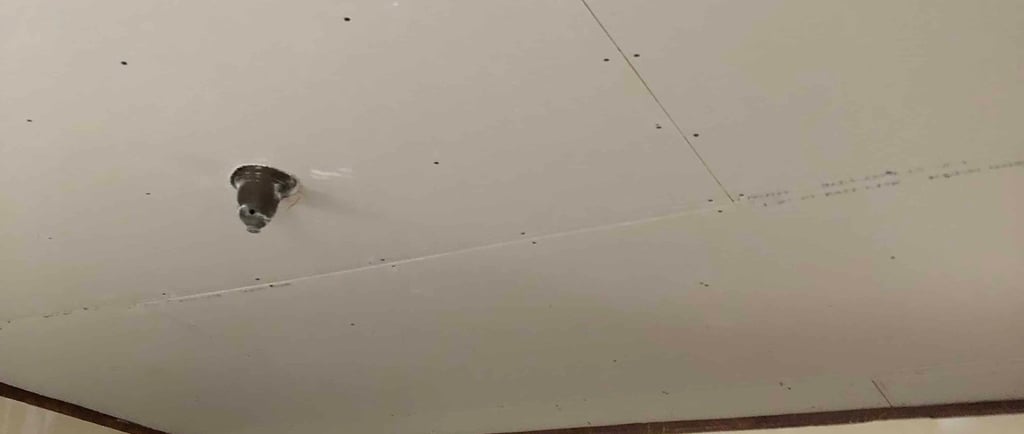
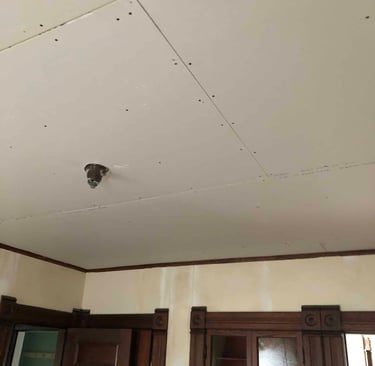
Types of Drywall for Ceilings
The best drywall for a ceiling depends on the room, the framing, and the amount of moisture the ceiling will deal with. A ceiling is harder to repair than a wall. It also shows sagging, cracks, and bad seams faster. That is why board choice matters.
At MrWalls Drywall & Painting, we install and repair drywall ceilings in bedrooms, bathrooms, basements, kitchens, additions, and older homes with mixed wall and ceiling materials.
Standard Drywall for Ceilings
Standard drywall works on many ceilings in dry rooms. Bedrooms, living rooms, hallways, and other low moisture areas often use regular drywall when the framing is sound and the spacing is right.
This is the basic board most people think of when they picture drywall. It works well when the room stays dry and the ceiling does not have moisture issues.
Lightweight Drywall
Lightweight drywall is easier to handle than older, heavier board. That matters on ceilings because every sheet has to be lifted overhead.
Many ceiling jobs use lightweight drywall because it helps with handling and still gives a solid finished surface when installed the right way. It can be a practical choice for standard rooms where moisture is not a major issue.
Moisture Resistant Drywall
Moisture resistant drywall is often used for ceilings in bathrooms, laundry rooms, and other damp areas. People often call it green board or purple board, depending on the product.
This type of board is made to hold up better in rooms with regular humidity. It is a common choice for bathroom ceilings, but it is not a fix for leaks. If water is getting in from above, the leak still has to be repaired.
Mold Resistant Drywall
Some drywall products are made to resist mold growth better than standard board. These can make sense in rooms where humidity stays higher, such as bathrooms, basements, or laundry spaces.
This kind of board is often chosen when homeowners want extra protection in rooms that have a history of damp air or poor ventilation.
Fire Rated Drywall
Fire rated drywall is used where building code or the layout of the house calls for it. This is common in garages, utility areas, and some ceilings near living space above or below.
It is heavier than standard drywall and not needed on every ceiling, but there are cases where it is the right board for the job.
Ceiling Board Thickness Matters
The type of drywall is only part of the decision. Thickness matters too.
A ceiling board needs enough stiffness to stay flat between framing members. If the board is too thin for the framing span, sagging can become a problem later. That is one reason ceiling installs need more planning than wall installs.
Smooth Ceilings and Textured Ceilings
Any of these drywall types can end up with a smooth finish or a textured finish, depending on the room. The board choice affects the base. The finishing work affects how the ceiling looks after primer and paint.
A smooth ceiling needs tighter finish work because light shows every seam and low spot. A textured ceiling still needs a solid, flat base underneath.
Which Drywall Works Best in Different Rooms
In dry rooms, standard or lightweight drywall is often enough.
In bathrooms, moisture resistant drywall is a more common choice.
In basements, the best choice depends on moisture history, ventilation, and how finished the space will be.
In garages or code specific areas, fire rated drywall may be required.
The right board depends on the room, not one rule for the whole house.
When the Wrong Drywall Causes Problems
We see ceiling problems when the wrong board was used, the framing was too wide, or the room had more moisture than expected. That often shows up as sagging sheets, cracked seams, peeling paint, soft spots, or tape failure.
A ceiling can also fail when the board type was fine, but the fastening, seam work, primer, or paint was done poorly.
What MrWalls Drywall & Painting Looks For
Before we install or replace a ceiling, we look at the room use, leak history, humidity, framing condition, and the finish the homeowner wants. Some ceilings need simple standard drywall. Others need moisture resistant or fire rated board. Older homes can also need extra work where drywall meets plaster.
Need Help Choosing the Types of Drywall for Ceilings
If you are trying to figure out the types of drywall for ceilings, MrWalls Drywall & Painting can help. We install new drywall ceilings, replace damaged ceiling board, repair cracks, and get ceilings ready for primer and paint.
Send a few photos or contact us for an estimate. We will look at the room and tell you the next step.
Need New Ceilings?Get in touch.
Address
600 E Main St
Chicopee, MA 01020
Contacts
Installation |. Finishing. | Repair |. Popcorn Ceilings. |. Ceilings | Home | Terms of Service | Privacy Policy