
Which Drywall For Bathroom Ceiling
The best drywall for a bathroom ceiling depends on the amount of moisture in the room and the condition of the framing above it. A bathroom ceiling deals with steam, temperature swings, and paint stress.
BATHROOM DRYWALL
MrWalls Drywall & Painting
3/25/20263 min read
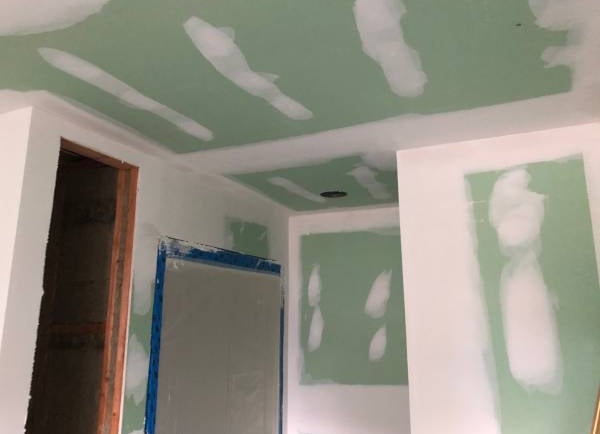
Which Drywall for Bathroom Ceiling
The best drywall for a bathroom ceiling depends on the amount of moisture in the room and the condition of the framing above it. A bathroom ceiling deals with steam, temperature swings, and paint stress. That makes board choice more important than it is in a dry bedroom or hallway.
At MrWalls Drywall & Painting, we install and repair bathroom ceilings after leaks, peeling paint, sagging drywall, cracked seams, and old moisture damage. If you are trying to figure out which drywall for bathroom ceiling work, here is what matters.
Bathroom Ceilings Need More Than Standard Thinking
A bathroom ceiling is different from a wall in a dry room. Steam rises. Moisture collects overhead. Poor ventilation makes the problem worse. Over time, that can lead to peeling paint, weak joints, mildew spots, and sagging board if the wrong material was used or the room stays damp too often.
That is why the ceiling board, joint work, primer, and paint all matter together.
Moisture-Resistant Drywall Is a Common Choice
For many bathroom ceilings, moisture-resistant drywall is a common choice. People often call it green board or purple board, depending on the product line. It is made for damp areas and holds up better than regular drywall in rooms with routine humidity.
This does not mean it can handle active leaks or constant wet conditions. It means it is better suited for a bathroom ceiling than plain drywall in many cases.
Regular Drywall Is Sometimes Still There
A lot of older bathrooms have regular drywall on the ceiling. Some are still fine. Some show peeling paint, tape cracks, or past water damage. The board may last for years if the bathroom has good ventilation and no leak history. Once moisture problems start, the ceiling usually shows it fast.
That is why we look at the room as a whole, not only the drywall type.
Cement Board Is Not the Usual Ceiling Choice
Some homeowners ask about cement board for a bathroom ceiling. Cement board has its place in tile areas, but it is not the usual choice for a standard painted bathroom ceiling. It is heavier, harder to finish like drywall, and often not needed for a normal ceiling outside a direct tile assembly.
For most painted bathroom ceilings, drywall designed for moisture exposure is the more common path.
Thickness Matters Too
Ceiling drywall needs enough stiffness to stay flat. If the framing spacing is too wide or the wrong board is used, sagging can become a problem over time. That is one reason bathroom ceiling jobs should be looked at as a full system, board type, framing support, fastening, taping, primer, and paint.
A ceiling can fail from poor support, even if the drywall type was decent.
Ventilation Affects How Well the Ceiling Holds Up
A bathroom ceiling lasts longer when the room vents properly. A good exhaust fan pulls moisture out before it sits on the paint and drywall. Without that, even a better board can end up with peeling paint, mildew spotting, and seam issues.
We often see damaged bathroom ceilings where the main problem was not the board alone. It was years of trapped steam.
Signs the Bathroom Ceiling Needs Repair
If the ceiling already has problems, board choice is only part of the job.
Common signs include:
Peeling paint
Brown stains
Soft drywall
Tape cracking at seams
Sagging areas
Mildew spots
Past patch work showing through
If the board is soft or the ceiling has leak damage, repair or replacement comes first. Paint alone will not solve it.
New Install and Repair Work
For a new bathroom ceiling, the goal is to use the right board for the room, hang it properly, finish the seams cleanly, and prime and paint it with products suited for bathroom use.
For an older bathroom, the first step is checking what failed. If the ceiling has stain damage, weak seams, or soft drywall, the damaged material needs to be cut out and replaced. Once the ceiling is sound again, the finish work can be done right.
Why Joint Work and Paint Matter
Even the right drywall for a bathroom ceiling can still fail early if the seams were finished poorly or the paint system was wrong. Bathrooms are hard on taped joints. They are hard on flat paint that was never meant for damp air.
That is why the drywall board is one part of the job, not the whole job.
What MrWalls Drywall & Painting Recommends
We look at the bathroom size, fan use, leak history, current damage, and framing condition before recommending what should go on the ceiling. In many cases, moisture resistant drywall is the practical choice for a painted bathroom ceiling. If there is old water damage or sagging, we remove the weak material first and rebuild the area properly.
Need Help Choosing Which Drywall for Bathroom Ceiling
If you are trying to decide which drywall for bathroom ceiling work makes sense, MrWalls Drywall & Painting can help. We repair and replace bathroom ceilings, patch moisture damage, fix cracked seams, and get ceilings ready for primer and paint.
Send a few photos or contact us for an estimate. We will look at the ceiling and tell you the next step.
Need New Ceilings?Get in touch.
Address
600 E Main St
Chicopee, MA 01020
Contacts
Installation |. Finishing. | Repair |. Popcorn Ceilings. |. Ceilings | Home | Terms of Service | Privacy Policy